
Sports physiotherapy. Bone stress injury specialists.
Raising the standard for stress fracture care.
A practice for runners and sporting athletes, built around the injury most people get wrong. Bone stress injury is the specialty. Everything else that stops you running or playing gets the same thinking: find the load problem, rebuild the capacity, progress on criteria.
Why it needs a specialist
Not all bone stress is the same.
Most of the damage gets done in the six weeks before anyone takes it seriously.
A tibial stress fracture is not a navicular, and a navicular is not a femoral neck. They heal on different timelines, they carry different risk, and they tolerate completely different rates of loading. Generic rest then run advice is how these recur.
Which bone it is drives almost everything that follows: how long you are off it, whether the plan needs imaging to progress, and how fast the loading can climb once it settles.
44 to 127
Days back to sport, depending on which bone is injured. Site matters more than almost anything else.
Hoenig et al., 2023, BJSM5 to 8x
More likely to get another bone stress injury once you have had one. Which is exactly why the rebuild matters.
Tenforde et al., 2013; Wright et al., 20158 to 14x
Bodyweight through the shin with every running step. Speed and hills move that number far more than volume does.
Matijevich et al., 2019; Meardon et al., 2021The approach
How a bone stress injury actually gets managed
- 01
Work out which bone, and how worried to be
Not all bone stress is the same. A low risk one is like a fox, annoying but it almost always goes well. A high risk one is a big scary wolf and it changes everything about the plan. That call, plus the right imaging read properly, drives every decision after it.
- 02
Take enough load off, and no more
Offloading is not about resting until it stops hurting. Healing bone lays down a scaffold that will not set if you keep loading it hard. Sometimes that means a boot, and the boot is there to let you keep doing things, not to disable you.
- 03
Rebuild the capacity that ran out
Injury is load exceeding what the tissue could take. So rehab is rebuilding what it can take, not waiting. Your calf is the bow string and your shin is the bow staff, and a calf that cannot absorb load leaves the bone to do it. Strength work here is heavy and it is the point.
- 04
Progress on criteria, not on the calendar
Bone adapts to short, sharp, varied doses and gets bored quickly, losing most of its sensitivity after about 40 to 60 reps and resensitising over the next 4 to 8 hours. Programs get built around that, and each step up has something that has to be true before you take it.
Loading and bone sensitivity principles after Warden, Edwards & Willy, 2021. The research here is robust but incomplete, and where the plan goes past it, that gets said out loud.
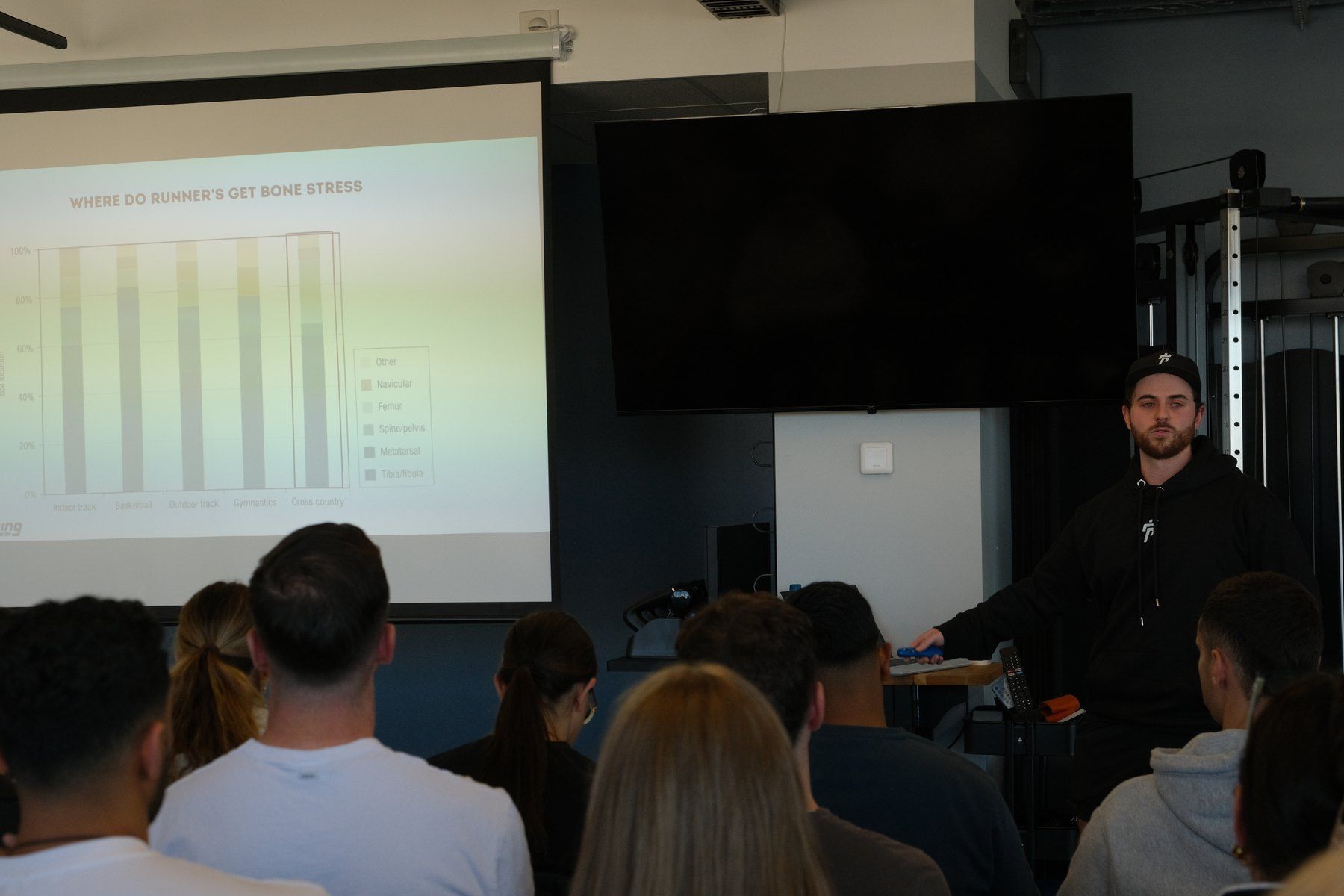
Teaching this to the clinicians who see it first.
Where to start
Two ways in, depending on who you are.
For runners and athletes
Any running or sporting injury, from a stress fracture to a stubborn Achilles. Assessment, imaging interpretation, a loading plan that keeps you functioning, and a staged return to run or sport you can actually see and follow. If you already have a plan with me, it lives in your patient login.
See patient servicesFor clinicians
One to one mentoring, case based co-consults, clinic presentations and courses. Bring the patient in front of you, not a textbook one, and leave with a plan you can action on Monday.
See clinician educationThe plan you get
Every run, every week, built and visible.
Plans are generated week by week from where you are right now, not from a template. Deload weeks are scheduled in deliberately so bone gets resensitised to load rather than ground down by it, and the week on week jump is capped so the build stays inside what the tissue can take.
It updates as you progress, and you can see the whole thing on your phone rather than chasing a PDF.
Log in to your program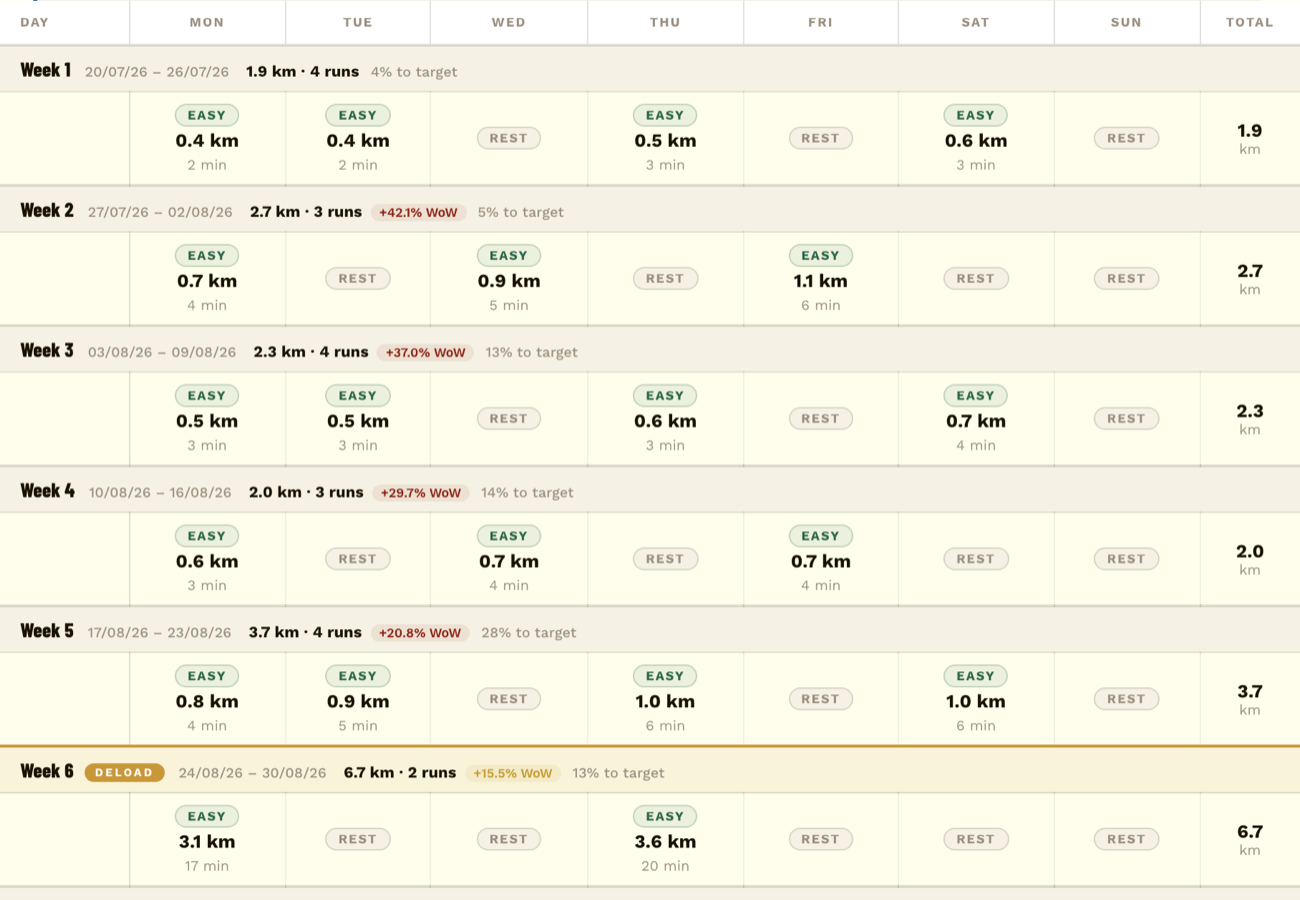
A real 24 week build generated by the Infinite Run Builder, starting from zero.
Education
Teaching this is half the job.
Most of the uncertainty clinicians feel with these cases comes from missing the mental model and reaching straight for a protocol. So the teaching starts with the framework, low risk versus high risk, capacity versus demand, and then applies it to real cases off your own list.
Presentations to clinics and conferences around Australia, one to one mentoring, and courses covering assessment, imaging, diagnosis and management end to end.
See courses and mentoring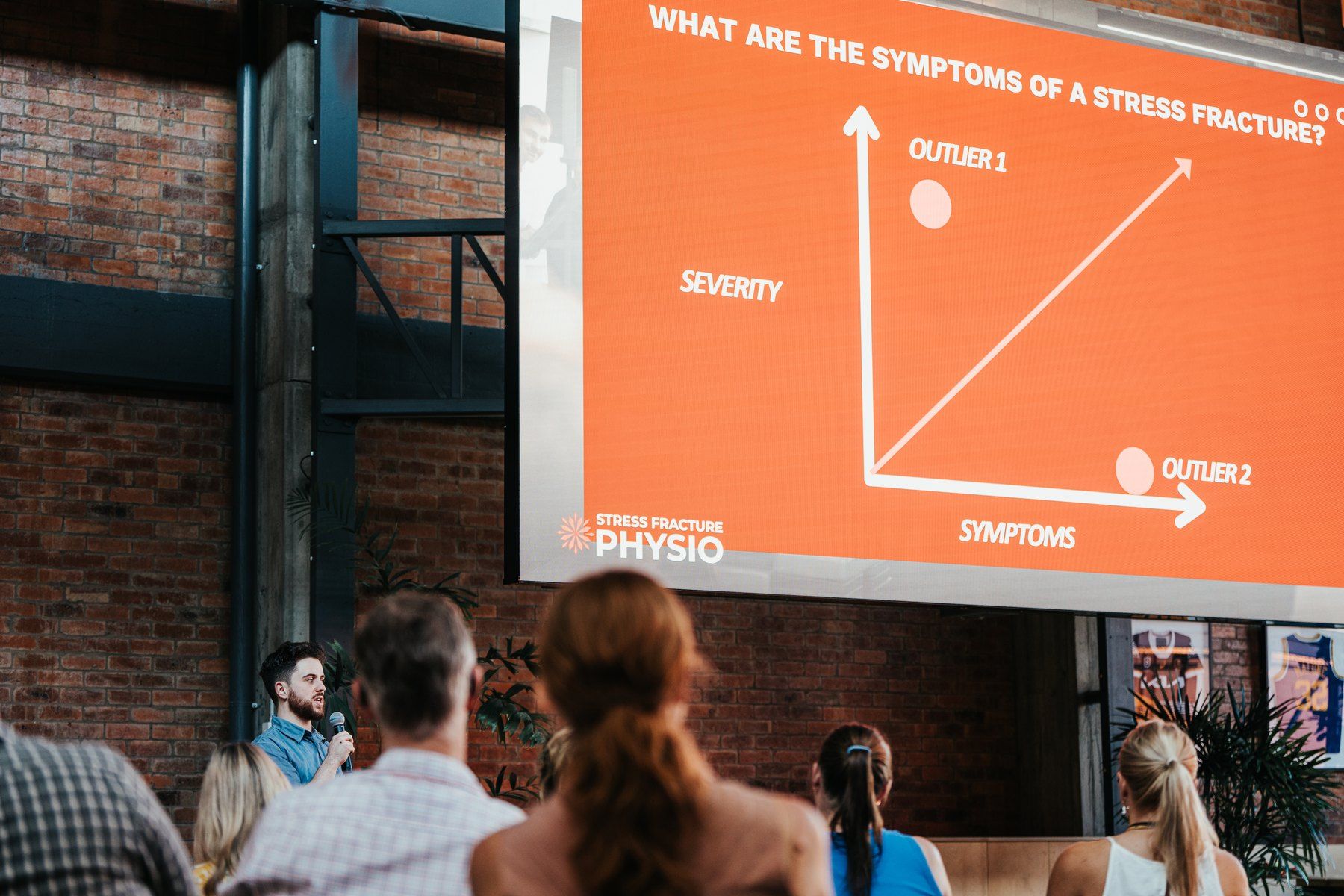
The bone stress injury playbook
Occasional practical guidance on loading, imaging and getting back to running. Written for runners and clinicians, no spam.